Reading the music
Flamenco palos explained for visitors
What a palo is, how the main families differ by rhythm and mood, and a few things to listen for during an hour of flamenco in a tablao.
Reserve your flamenco hour ↗Quick answer
A palo is one of flamenco's traditional musical forms, told apart by rhythm, mode and mood. Some palos are slow and weighty, some lively, some sung with no instruments at all. You can enjoy a show without naming any of them, though knowing a few families helps. Both the cast and the running order shift between evenings, so use this as a listening guide rather than a programme.
What a palo is
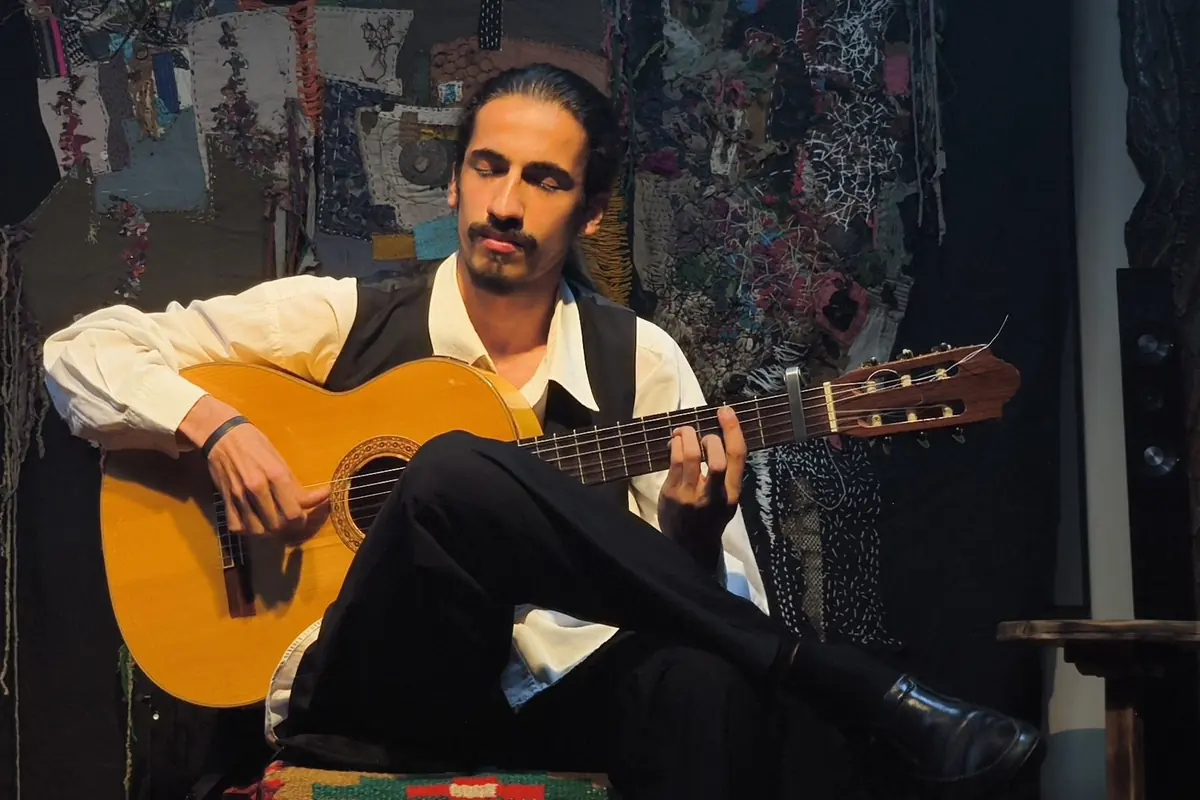
Wikipedia defines a palo as any of the traditional musical forms in flamenco, and the word also means a suit of cards: a category. Palos are told apart by rhythm, mode, melodic motifs, stanza type and origin, although the same article calls the concept neither straightforward nor rigorous. Most palos include dozens of traditional songs. When a performer begins one, they are choosing a rhythm and a mood to work in, then improvising within it.
Deep, middle and light
A traditional grouping sorts palos by mood. Cante jondo, also called cante grande, covers the most serious forms. Cante chico covers the lighter ones, and cante intermedio the forms between the two. Wikipedia credits a three-way split by mood to the researcher Christof Jung in 1990. You can hear the difference without theory: a weighty palo makes the room still, while a lighter one makes feet tap and hands clap.
Twelve beats, two accents
A good number of palos run on a twelve-beat cycle called a compás. The soleá and the seguiriya both use twelve beats, but the accents fall in different places, so they feel quite different. Wikipedia notes that starting the soleá count on the eighth beat gives the seguiriya rhythm. You do not need to count. If you hear performers clapping a repeating pattern that seems to start late and land hard, you are listening to compás at work.
Tangos, tientos and the family on four
The tango family covers most flamenco forms in four-beat time. Tientos are a slower, more syncopated cousin of the tangos, and Wikipedia compares their rhythm to the habanera. The farruca belongs to the same family, and the article says it probably came from Asturias and Catalonia before it took on flamenco character in Andalusia. If a piece feels steady and square, with a clear pulse you could march to, you are probably in this family.
Fandangos and malagueñas
Fandangos belong to a family of stylised Andalusian folk forms. In regular rhythm they follow a triple or six-eight pulse. The malagueña, from the same family, is now usually sung in free rhythm, without a fixed beat, which makes it feel like a long held breath. Wikipedia lists the granaína as another free-rhythm form. When the singer seems to float away from the guitar and then return, you are probably hearing one of these.
Voice alone
Some palos are sung without any instrument. Wikipedia names martinetes, carceleras and saetas among these a cappella forms, and says some theorists regard them as the origin of all flamenco songs. Saetas are reserved for Holy Week processions, so you will not hear one in a tablao. In a small room, a voice with no guitar makes every other sound feel loud, including a glass set down on a table.
Songs that crossed the ocean
The guajira belongs to the ida y vuelta group, which means round trip: songs that crossed to the New World, picked up new influences, and returned to Andalusia. Wikipedia lists Cuban guajiras among them. It is a reminder that flamenco has never been sealed off from the rest of the world. For a visitor from northern Europe, the idea that a palo can have travelled to Cuba and back is a useful way into the music.
What you will hear tonight
That depends on the artists. Tablao Flamenco Alma describes its hour as improvised, with dance, singing and guitar, and its line-up changes in blocks of about two weeks. Expect no set list. Listen for the first shift of rhythm, the moment the guitar changes key, and the entry of the dancer's heels. Those cues tell you more than a palo name.
Frequently asked questions
How many palos are there?
There is no single agreed count. Wikipedia says most palos hold dozens of traditional songs, and that the concept of a palo is not rigorous.
Do I need to know the palos to enjoy a show?
No. Knowing a few helps you listen, but the performers carry the mood with dance and guitar, and the host speaks English and German.
Will the show include every palo?
No. The hour is improvised, and the line-up changes every couple of weeks, so the palos you hear depend on that run's artists.
Sources